

The growing popularity of infrastructure-as-code (IaC) has made IaC management solutions mandatory. One of the most widely used products in this category is Atlantis.
What is Atlantis?
Atlantis is an open-source automation tool that improves the pull request (PR) workflow for OpenTofu, Terraform, and Terragrunt projects. It is self-hosted, with no SaaS offering, and it reduces the collaboration and governance friction of running Terraform across a team.
Atlantis arrived in 2017, before the current generation of Terraform automation platforms existed. At the time, the choice was a raw CI pipeline or nothing, and Atlantis offered something neither did: plan and apply output posted straight into the PR, where reviewers already worked.
That PR-native model is still why teams reach for it. It supports multiple VCS providers and runs as a Go binary or Docker image you can deploy on VMs, Kubernetes, or Fargate.
This is a minimal repo-level atlantis.yaml. It tells Atlantis which directory holds the configuration, to plan automatically when .tf files change, and to block applies until the pull request is approved and mergeable.
# atlantis.yaml at the repo root
version: 3
projects:
  - name: production
    dir: environments/production
    autoplan:
      when_modified: ["*.tf", "../../modules/**/*.tf"]
      enabled: true
    apply_requirements: [approved, mergeable]
Once that is in place, the entire workflow happens in the pull request through comments, which is the pattern that made Atlantis popular in the first place.
atlantis plan    # re-run the plan
atlantis apply   # apply, only after approval
Atlantis limitations
Atlantis enhances your workflow, but you should consider the following limitations before choosing it as the TACOS for your organization:
- Workflow complexity: Atlantis relies heavily on pull requests for its operations, which can be non-intuitive and cumbersome, especially when setting up multiple workspaces linked to a monorepo
- Coarse deployment permissions: Anyone with comment access on an approved pull request can trigger an apply, which may result in unintended deployments to production or other environments.
- Limited policy enforcement: Atlantis supports Open Policy Agent (OPA) in the workflow, but the integration is shallow compared to purpose-built platforms, so enforcing consistent compliance across many projects takes real effort.
- No private registry: Atlantis doesn’t offer any solution for private module/provider registry.
- Complex configuration process: It can be hard to configure.
- No drift detection: Atlantis doesn’t offer the direct drift detection that other TACOS do, but you can configure drift detection tools as part of your CI/CD.
Consider a common situation: someone makes a quick change in the cloud console on a Friday to resolve an incident, intending to codify it later. Over the weekend, that change sits unnoticed, and the next Terraform apply quietly reverts it or fails.
Atlantis has no native way to surface that gap, because it only acts when a pull request opens. Tools with built-in drift detection catch the divergence on a schedule, before the next apply turns it into a second incident.
How we review software at Spacelift
We aim to make our recommendations practical and vendor-neutral. For each tool we include, we evaluate category fit, core capabilities, integrations, documentation quality, security/governance features (when relevant), and pricing transparency. We also reference public review signals to validate common strengths and limitations.
Best Atlantis alternatives
In this guide, we consider direct alternative platforms that are self-hosted and also offer OpenTofu/Terraform management natively, as well as indirect alternative platforms that don’t check both boxes:
1. Spacelift
Spacelift is the publisher of this article. We’ve included ourselves so you can compare directly, but treat this entry as a vendor perspective, not an independent ranking.
Spacelift is an Atlantis alternative for building workflows across OpenTofu, Terraform, Terragrunt, CloudFormation, Pulumi, Ansible, and Kubernetes.
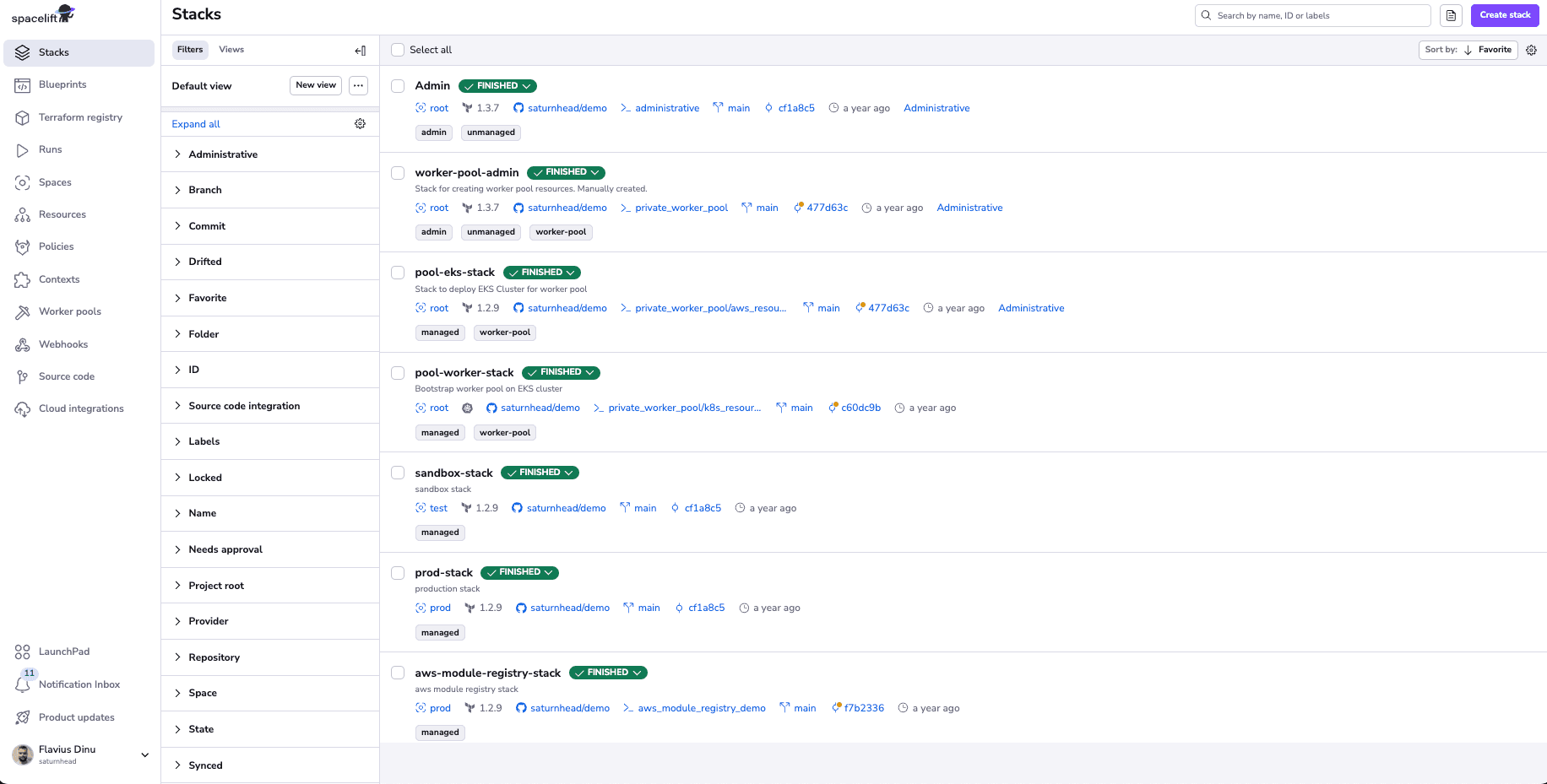
Where Atlantis is PR automation for Terraform, Spacelift adds OPA policies at multiple decision points, a built-in private module registry with version testing, built-in drift detection with optional remediation, and Stack dependencies that pass outputs between configurations, including across tools (for example, feeding VM IPs from an OpenTofu Stack into an Ansible inventory).
Templates extend that into self-service, letting application developers deploy approved infrastructure through a form without writing IaC.
Spacelift also offers an AI layer, Spacelift Intelligence, on top of these workflows. It pairs an assistant that answers questions about your infrastructure state, changes, and drift in plain language with Intent, a natural-language path (available open source or as part of the platform) for provisioning non-critical infrastructure, governed by the same policies, visibility, and audit trails as your IaC.
- Category: IaC orchestration and management platform with an AI layer
- Deployment: SaaS and self-hosted
- IaC support: OpenTofu, Terraform, Terragrunt, CloudFormation, Pulumi, Ansible, and Kubernetes
- Licensing: Commercial; free tier available
Check out the video below for more details:
2. Terraform Enterprise
Terraform Enterprise is HashiCorp’s self-hosted offering for Terraform workflows, built for organizations that standardized on Terraform and HashiCorp’s own governance model.
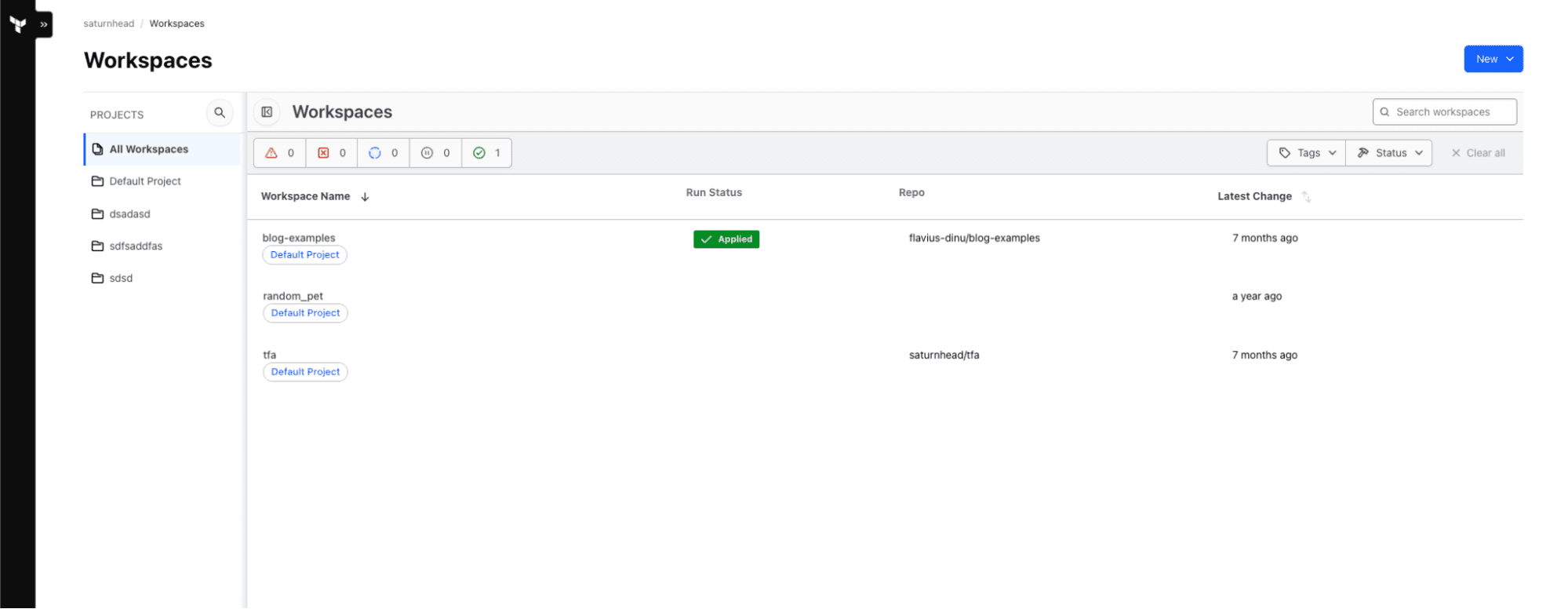
Its policy engine, Sentinel, and its Run Tasks integration framework are the features teams tend to build their processes around. That history is also the constraint: it manages Terraform and little else, so OpenTofu, Pulumi, CloudFormation, and Kubernetes fall outside its scope, and Terragrunt only works through a workaround.
Two practical limits show up quickly. Third-party integrations are restricted to supported Run Tasks, so a tool without one cannot plug in cleanly. Passing outputs from one configuration to another requires custom Terraform rather than a native mechanism.
The 2023 license change from MPL to BUSL is what prompted many teams to evaluate alternatives in the first place.
- Category: Self-hosted Terraform platform (HashiCorp)
- Deployment: Self-hosted (HCP Terraform is the SaaS sibling)
- IaC support: Terraform only
- Licensing: Commercial; HashiCorp now sits inside IBM
3. Jenkins
Jenkins is a self-hosted, general-purpose CI/CD server that predates the current generation of IaC tooling. It was created in 2011 as a fork of the Hudson project and has since become one of the most widely deployed automation servers, extended through an ecosystem of well over 1,000 plugins.
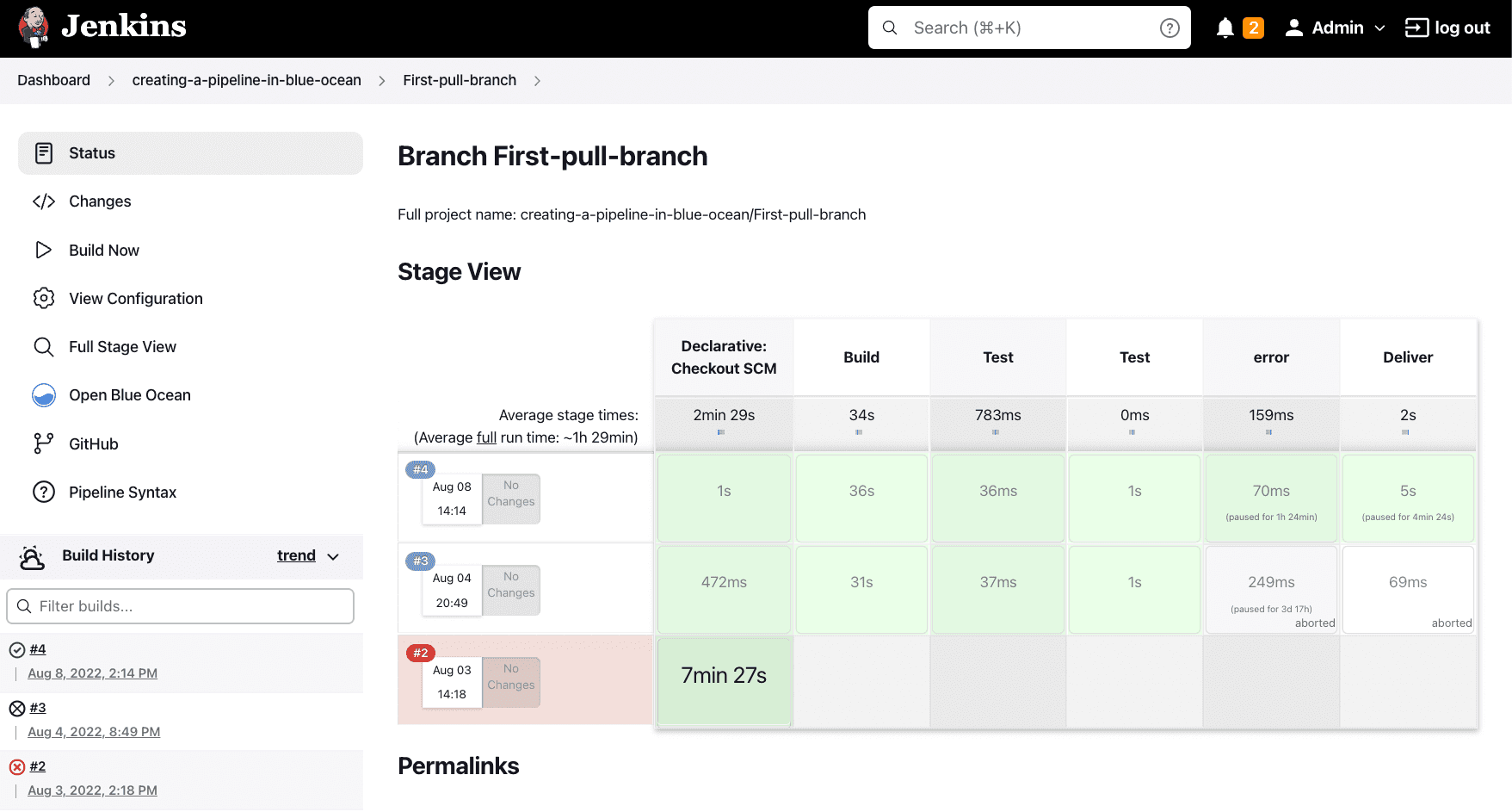
Pipelines are defined in Groovy, and you can run Terraform or OpenTofu through them as you would any other build step.
The trade-off is that Jenkins has no native understanding of infrastructure concepts: there is no built-in state handling, drift detection, policy enforcement, or module registry. Teams build those capabilities themselves with plugins and scripts, then maintain that setup over time.
Jenkins is most often kept as an Atlantis alternative when an organization already runs it for application CI and wants to avoid introducing a separate tool for infrastructure.
- Category: General-purpose CI/CD automation server
- Deployment: Self-hosted
- IaC support: Any, through plugins and scripting
- Licensing: Open source (MIT)
4. GitHub Actions
GitHub Actions runs CI/CD directly inside your GitHub repositories. Workflows live in .github/workflows as YAML, and reusable logic is bundled into actions that you can publish and share through the marketplace.
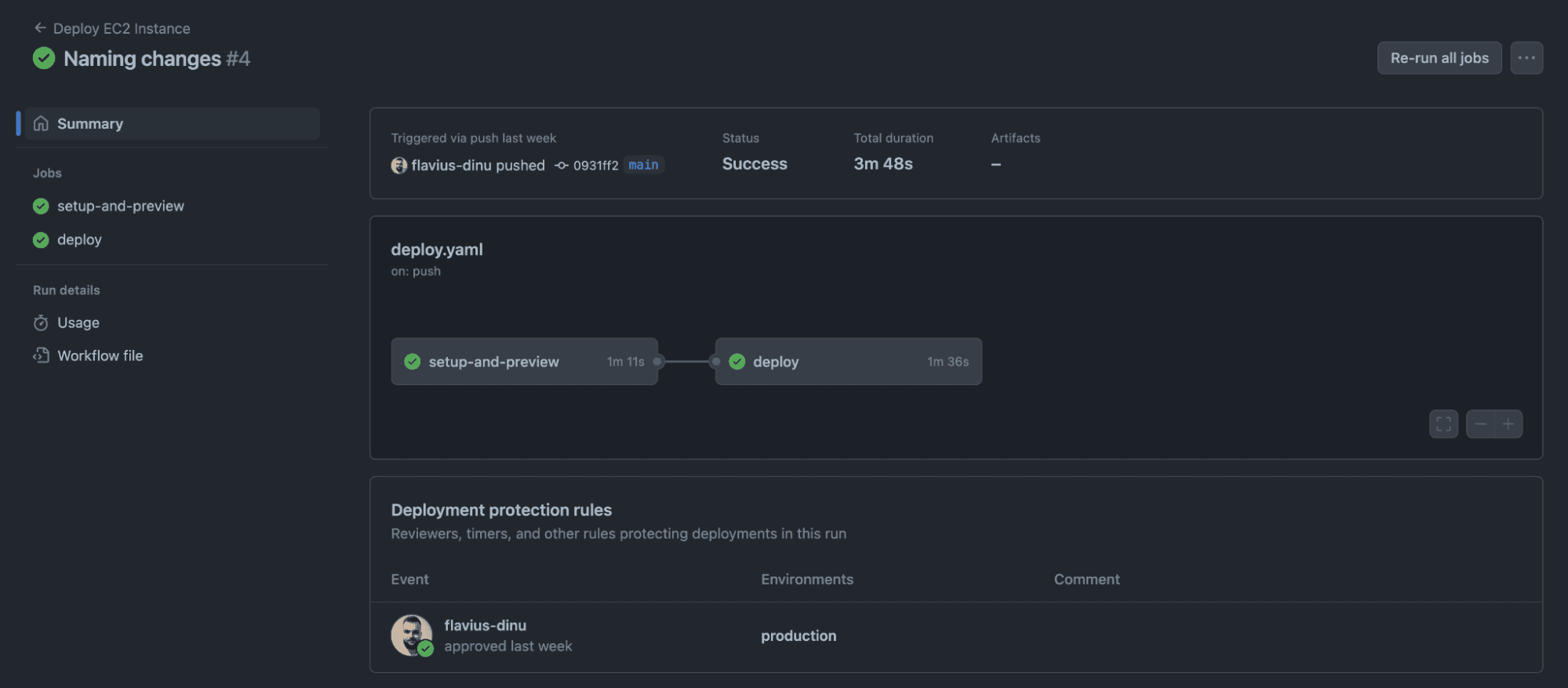
For infrastructure work, teams typically combine community actions such as the official Terraform setup action with a remote state backend and OIDC-based cloud authentication. It handles both application and infrastructure deployment, which makes it broader in purpose than Atlantis.
For IaC specifically, it provides no native state management, drift detection, or policy layer, so those have to be assembled from separate actions and services.
Billing is based on runner minutes, which is worth modeling before standardizing on it for frequent plan and apply runs.
This runs a Terraform plan whenever a pull request opens, but the output lands in the CI logs rather than in the pull request itself. Recreating the Atlantis experience, where the plan appears as a PR comment the team reviews in place and the apply waits for approval, means adding extra steps to post results back and gate the apply.
name: terraform
on: [pull_request]
jobs:
  plan:
    runs-on: ubuntu-latest
    steps:
      - uses: actions/checkout@v5
      - uses: hashicorp/setup-terraform@v3
      - run: terraform init
      - run: terraform plan
GitHub Actions is more versatile for CI/CD than Atlantis, allowing you to handle both application and infrastructure deployments.
- Category: CI/CD integrated with GitHub
- Deployment: SaaS-hosted runners, plus self-hosted runners you register at the repository, organization, or enterprise level
- IaC support: Any, through YAML workflows and actions; no native state, drift, or policy
- Licensing: Commercial; usage-based minutes with a free tier
5. Azure DevOps
Azure DevOps is an application lifecycle suite rather than a single CI/CD tool. Alongside pipelines, it includes Git repository hosting (Repos), work tracking (Boards), package hosting (Artifacts), and managed test tooling (Test Plans).
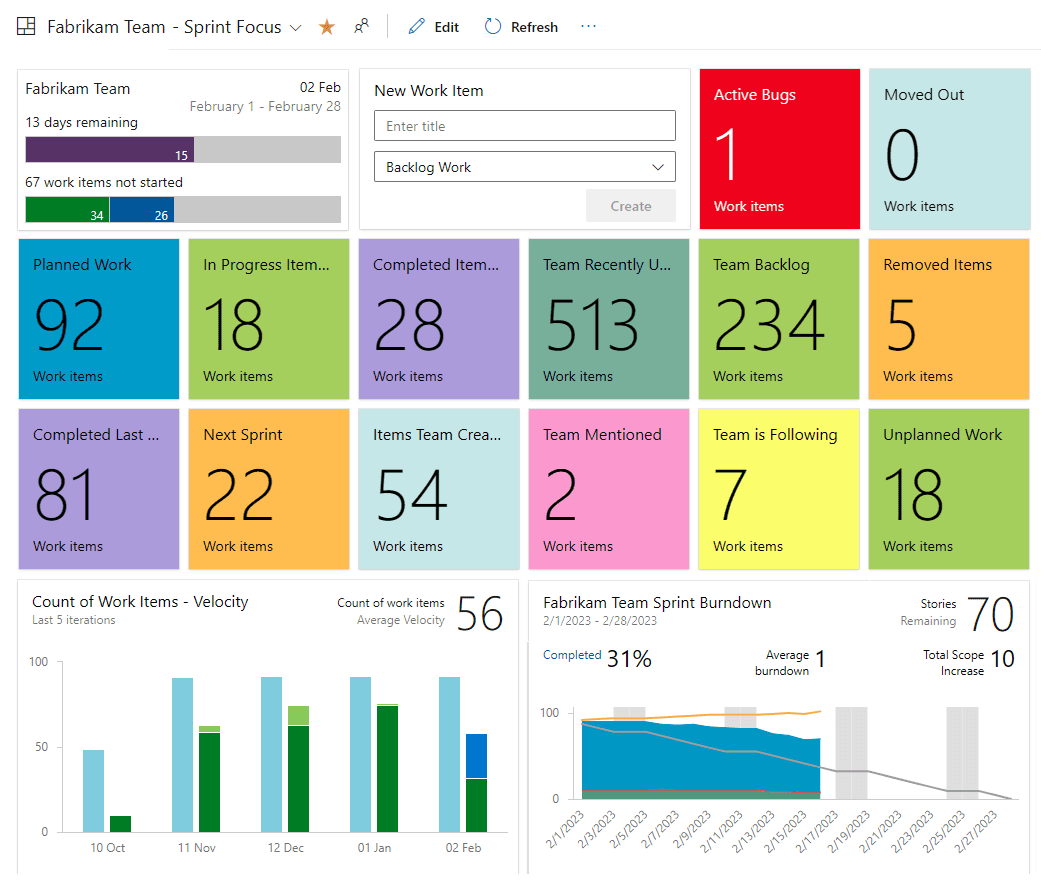
Pipelines are written in YAML and can be packaged into a shared library and reused across projects, much as you would reuse a Terraform module. It integrates closely with Azure services and Entra ID.
Its natural home is organizations already invested in the Microsoft ecosystem, where keeping source, planning, and delivery under one roof is the draw. For infrastructure work, it treats Terraform as one more pipeline workload rather than a first-class concern, so any IaC-specific guardrails are yours to build.
- Category: Application lifecycle suite with CI/CD (Microsoft)
- Deployment: SaaS (Azure DevOps Services) and self-hosted (Azure DevOps Server)
- IaC support: Any, through YAML pipelines; not IaC-specialized
- Licensing: Commercial; per-user
6. GitLab CI/CD
GitLab CI/CD mirrors GitHub Actions but lives inside the GitLab ecosystem, defining pipelines in YAML across the full software development lifecycle (SDLC). For teams already on GitLab, it covers source, CI/CD, and issue tracking without leaving the platform.
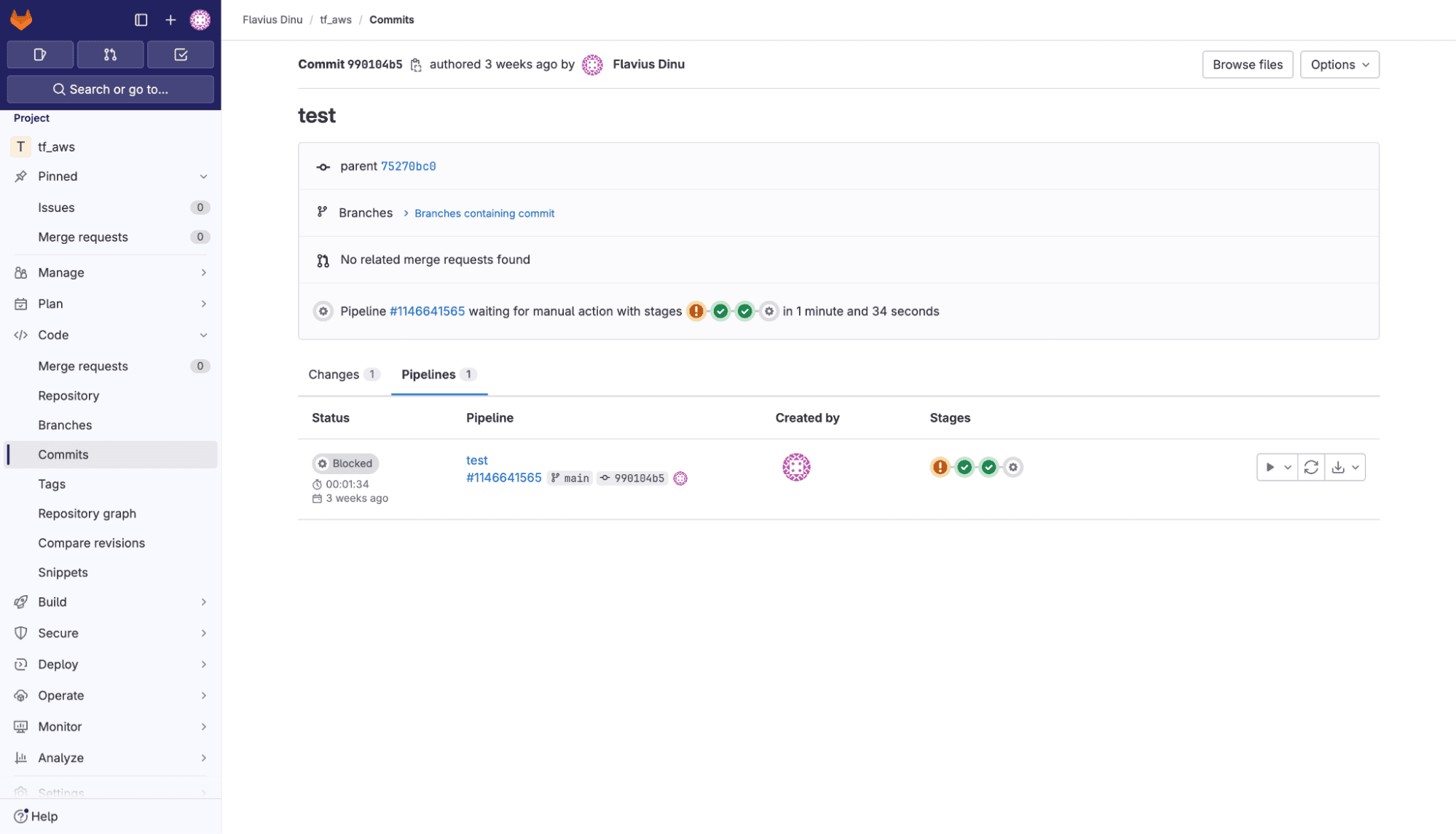
What sets it apart from a generic CI runner for IaC work is that GitLab ships a managed Terraform and OpenTofu state backend and a module registry built into the platform. That means you are not starting from a blank slate for state and modules the way you would in Jenkins or raw GitHub Actions.
It still lacks dedicated drift detection and an OPA-style policy engine, so the deeper governance layer is not there.
Compared to GitHub Actions, GitLab CI/CD has a broader scope, focusing on IaC.
- Category: CI/CD integrated with GitLab
- Deployment: SaaS and self-hosted
- IaC support: Any via YAML, plus a managed Terraform/OpenTofu state backend and module registry
- Licensing: Open core; Community Edition is open source, premium tiers are commercial
7. env0
env0 (now branded env zero) is a management platform in the TACOS category, built for OpenTofu and Terraform and supporting additional frameworks such as Terragrunt and CloudFormation.
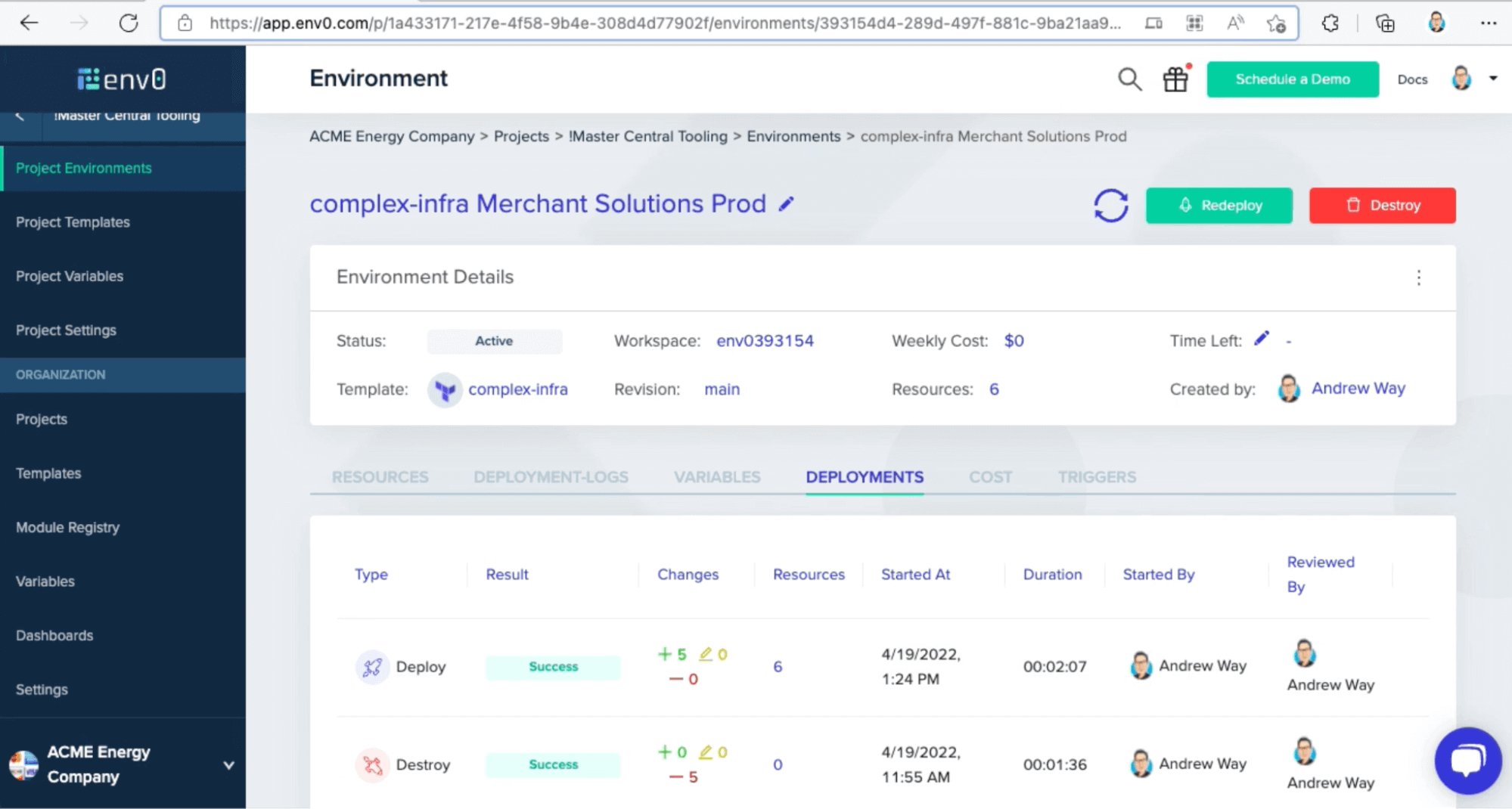
It is delivered primarily as SaaS, with self-hosted agents available so runs can execute inside your own network while the control plane stays managed.
Its signature feature is ephemeral environments with a time-to-live. You spin up a full environment for a pull request, a review, or a demo, and it self-destructs on a schedule so cloud spend does not quietly accumulate from environments nobody remembered to tear down.
That focus on short-lived, cost-bounded environments is the clearest reason teams pick it over a general TACOS.
- Category: Terraform and OpenTofu management platform (TACOS)
- Deployment: SaaS, with self-hosted agents
- IaC support: OpenTofu, Terraform, Terragrunt, Pulumi, CloudFormation, Kubernetes/Helm, and custom templates
- Licensing: Commercial
8. Scalr
Scalr is a TACOS focused on governance and automation across cloud environments. It supports OPA policies and ships a provider and module registry, putting it in the same broad category as several other tools here.
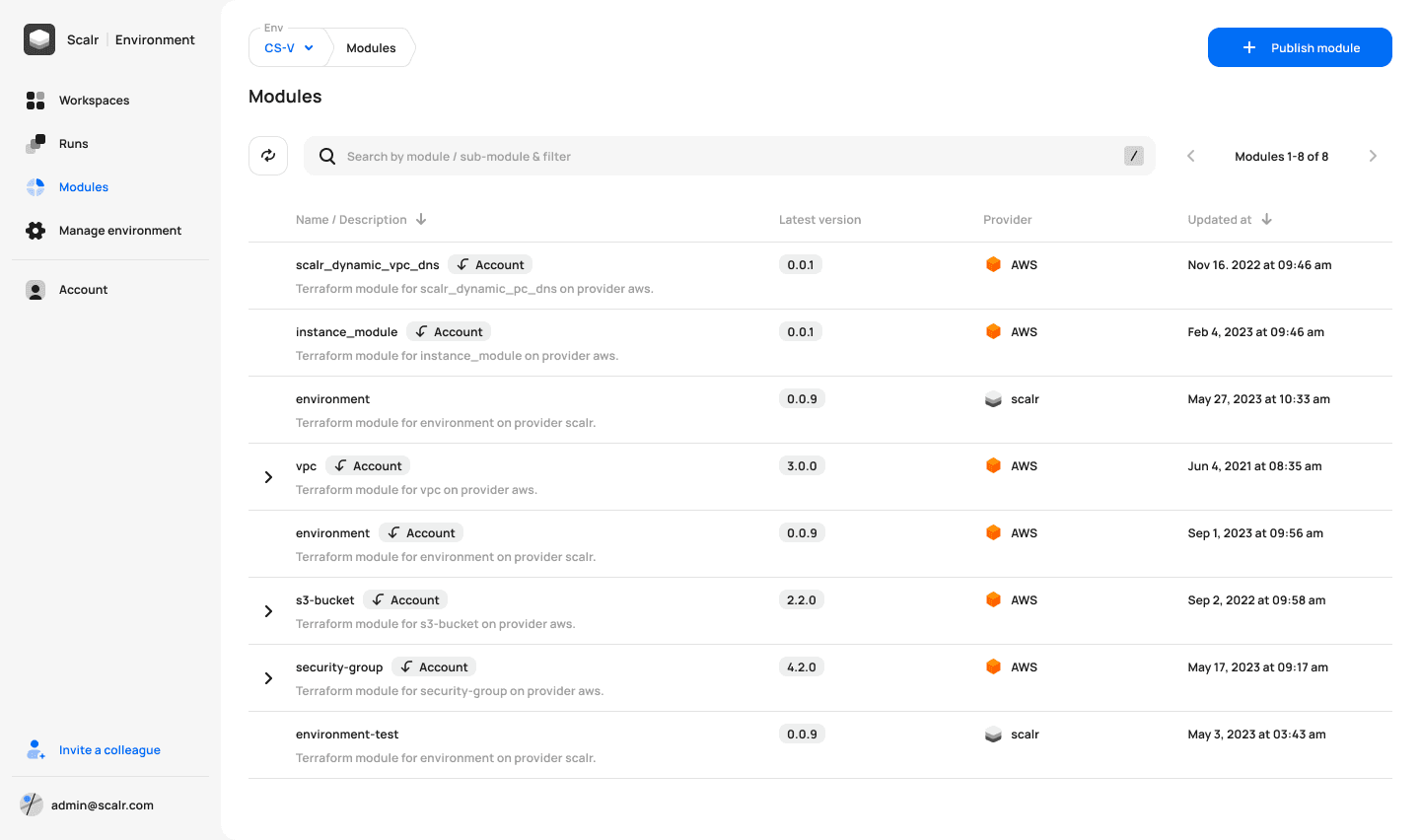
Its distinguishing idea is a hierarchical model. Policies, variables, and provider configuration cascade from the account level down through environments to individual workspaces, so a platform team sets a guardrail once and every workspace below inherits it.
That structure suits organizations with many teams that need consistent, inherited governance rather than per-workspace configuration repeated by hand.
- Category: Terraform and OpenTofu management platform (TACOS)
- Deployment: SaaS with self-hosted agents
- IaC support: OpenTofu, Terraform, and Terragrunt
- Licensing: Commercial
Read more: Scalr Alternatives: When to Switch & What to Switch To
9. Morpheus
Morpheus belongs to a different category from most of this list. It is a hybrid cloud management platform with a self-service provisioning catalog, not a pull-request-driven Terraform tool, so comparing it to Atlantis is a bit like comparing a service catalog to a code review workflow.
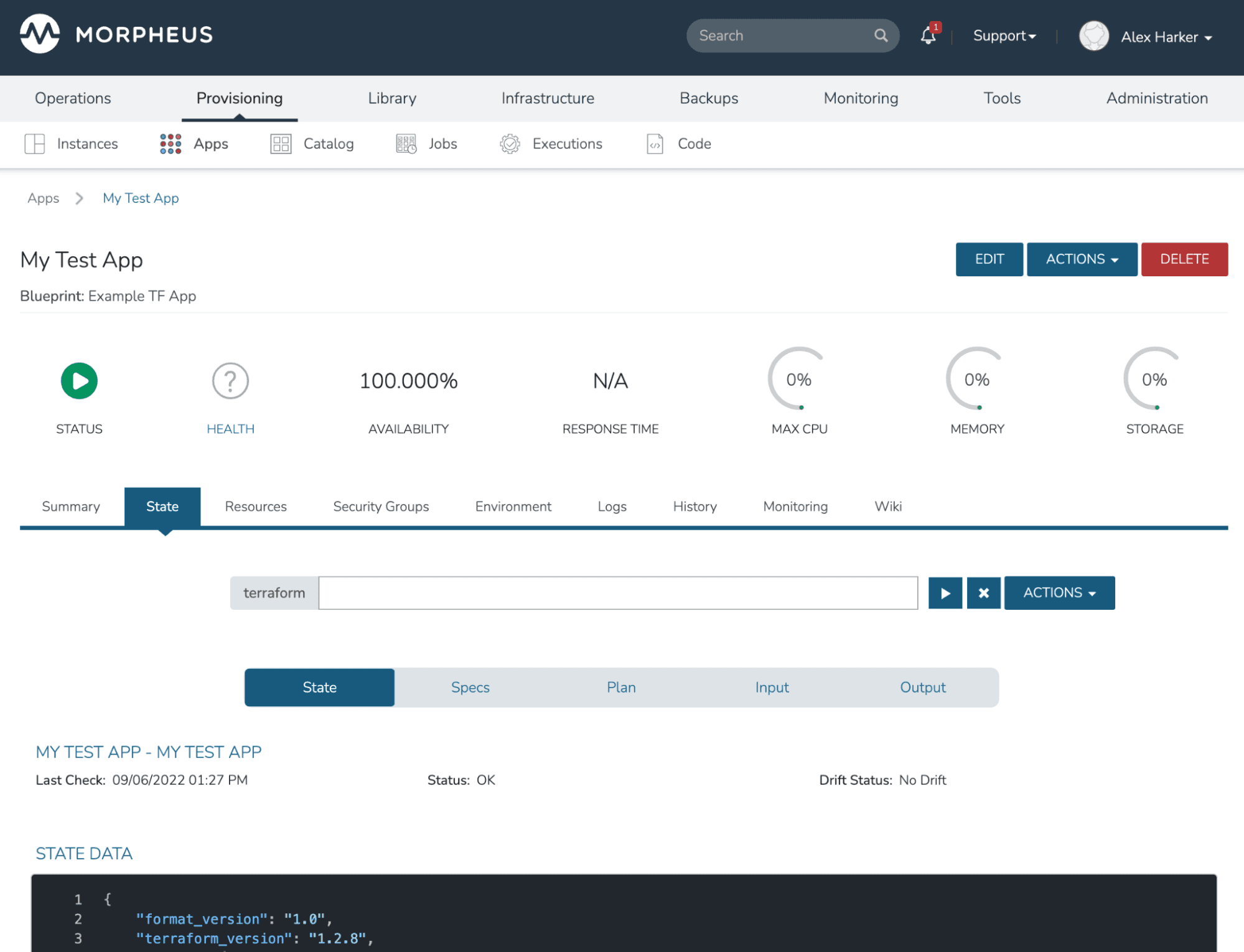
Its focus is developer velocity across a broad estate. Teams browse a catalog to stand up VMs, containers, and applications quickly, with governance and cost controls attached to each request.
It can orchestrate IaC tools underneath, but the reason to choose it is the catalog and the hybrid cloud breadth, not Terraform automation specifically.
- Category: Hybrid cloud management platform, now part of HPE
- Deployment: On-premises and SaaS
- IaC support: Orchestrates Terraform, Ansible, and others; not pull request based
- Licensing: Commercial
10. Azure Automation
Azure Automation is a cloud-based automation service for the Azure platform, using runbooks written in PowerShell and Python to carry out provisioning, configuration, and operational tasks.
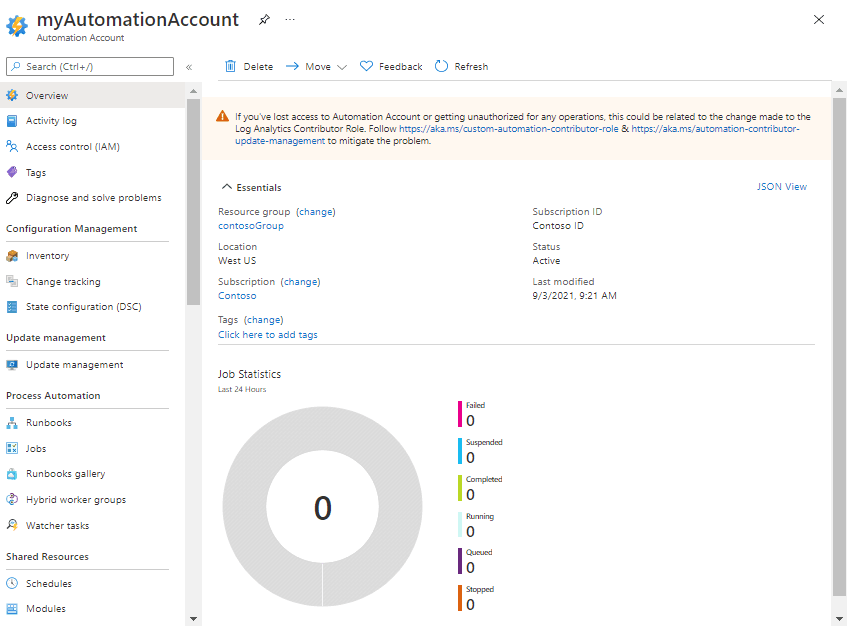
Its heritage is configuration management and process automation rather than pull-request-based IaC, which sets it apart from Atlantis. It is also scoped to Azure, whereas Atlantis is built for multicloud OpenTofu and Terraform workflows.
One detail worth checking before adopting it: Azure Automation State Configuration, the Desired State Configuration (DSC) feature, is on a deprecation path, with Microsoft directing users toward Azure Machine Configuration.
For teams already operating heavily in Azure, it remains a way to schedule and run infrastructure tasks without adding another platform.
- Category: Azure cloud automation and configuration service
- Deployment: SaaS (managed Azure service)
- IaC support: PowerShell and Python runbooks; Azure-focused
- Licensing: Commercial; billed through Azure usage
Key points
Atlantis is not the wrong answer for everyone. If you run a single VCS, a handful of Terraform repositories, and a small team that already lives in pull requests, Atlantis does the job for free and asks for very little. There is no per-seat cost, no SaaS dependency, and no new interface for your engineers to learn, since the workflow happens where they already review code.
Plenty of platforms can stand in for Atlantis, but few combine all of what teams outgrow Atlantis for: infrastructure specialization, self-hosting, stronger PR automation, governance, and multi-tool workflows that share outputs between them. Match the tool to where you actually are.
If you have outgrown PR-based Terraform automation and need policy, drift detection, and cross-tool dependencies in one place, Spacelift covers that range. If you have not, the lighter options above may serve you fine.
To see how Spacelift handles your workflows, create a free account or book a demo.
The best Atlantis alternative
Spacelift is an Atlantis alternative that provides a more intuitive, versatile, and robust GitOps workflow, granular access control, drift detection, and many more. It’s a better, more flexible CI/CD for Terraform, offering maximum security without sacrificing functionality. Spacelift embraces all of Atlantis’ features, offering them in a modern and sophisticated SaaS product.