[IaCConf Virtual Event] Why open-source IaC is far from dead
Achieve Terraform at Scale
Spacelift simplifies the rapid expansion of Terraform use while incorporating the benefits of Terragrunt and Atlantis workflow to achieve organizational success.
Start for FreeSelf-Service Infrastructure
Automated workflows help everyone understand the impact of proposed changes, providing continuous delivery to the infrastructure your teams need
Developer freedom with Policies
Full control to design the guardrails that empower you to make even policy-based decisions, ranging from access and RBAC to handling repository events
Trusted by top companies, including:


















Stay in (git) flow
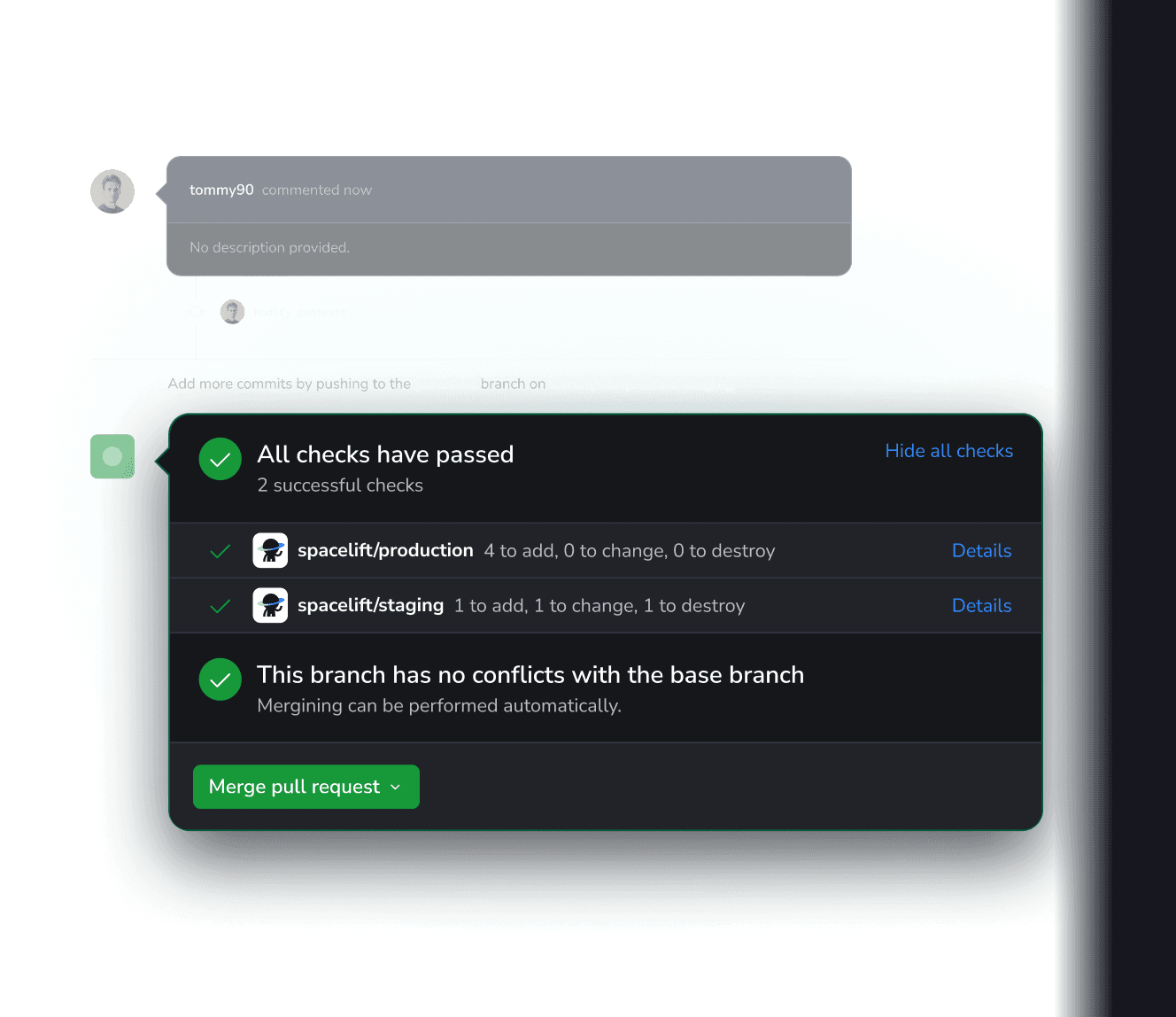
Our native Pull Request integrations support fully custom delivery workflows.
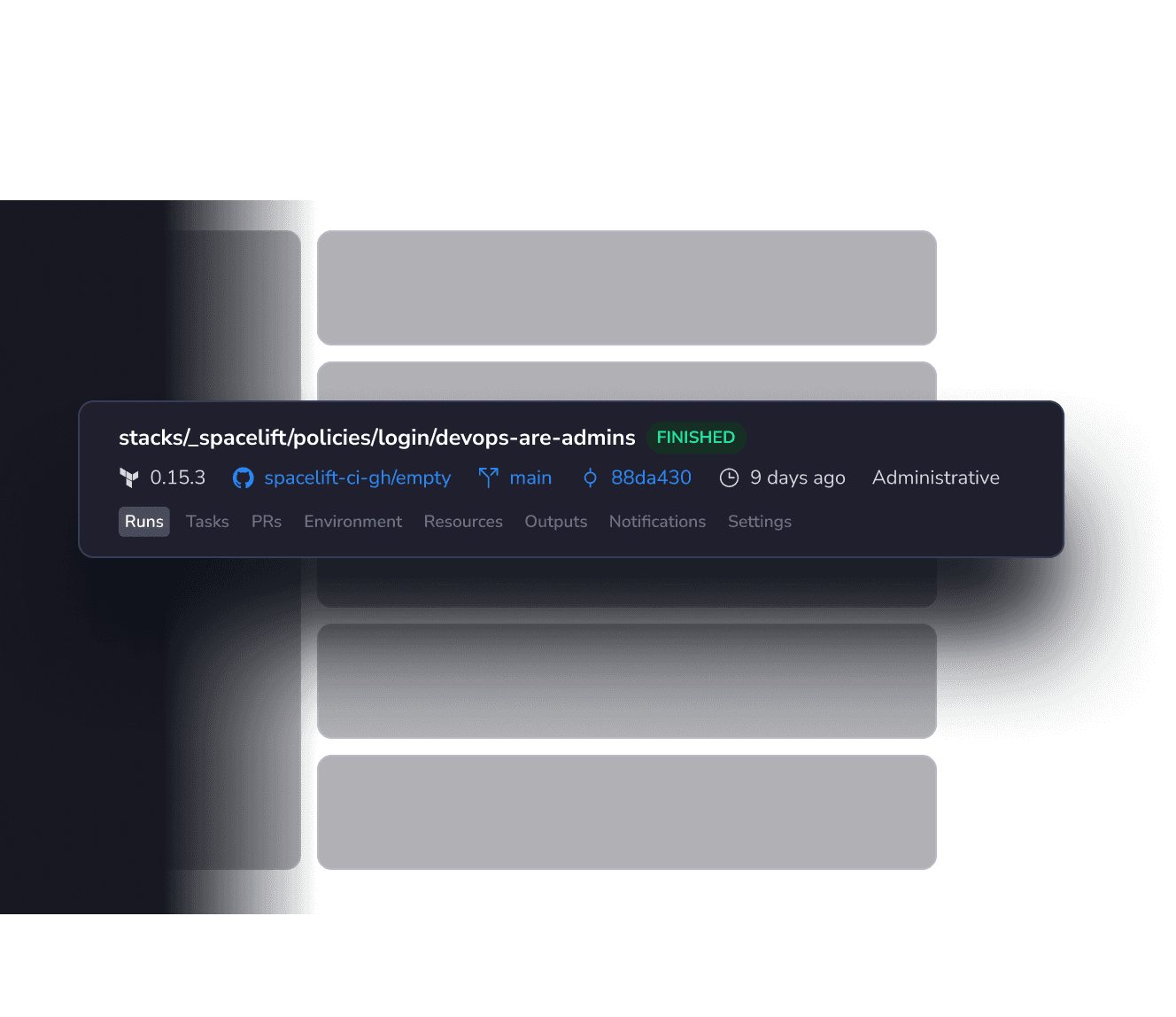
Stack
A combination of source code, current state of the managed infrastructure (eg. Terraform state file) and configuration in the form of environment variables and mounted files
Plan and apply on PR
Apply after merge, or Atlantis-style apply from your PR
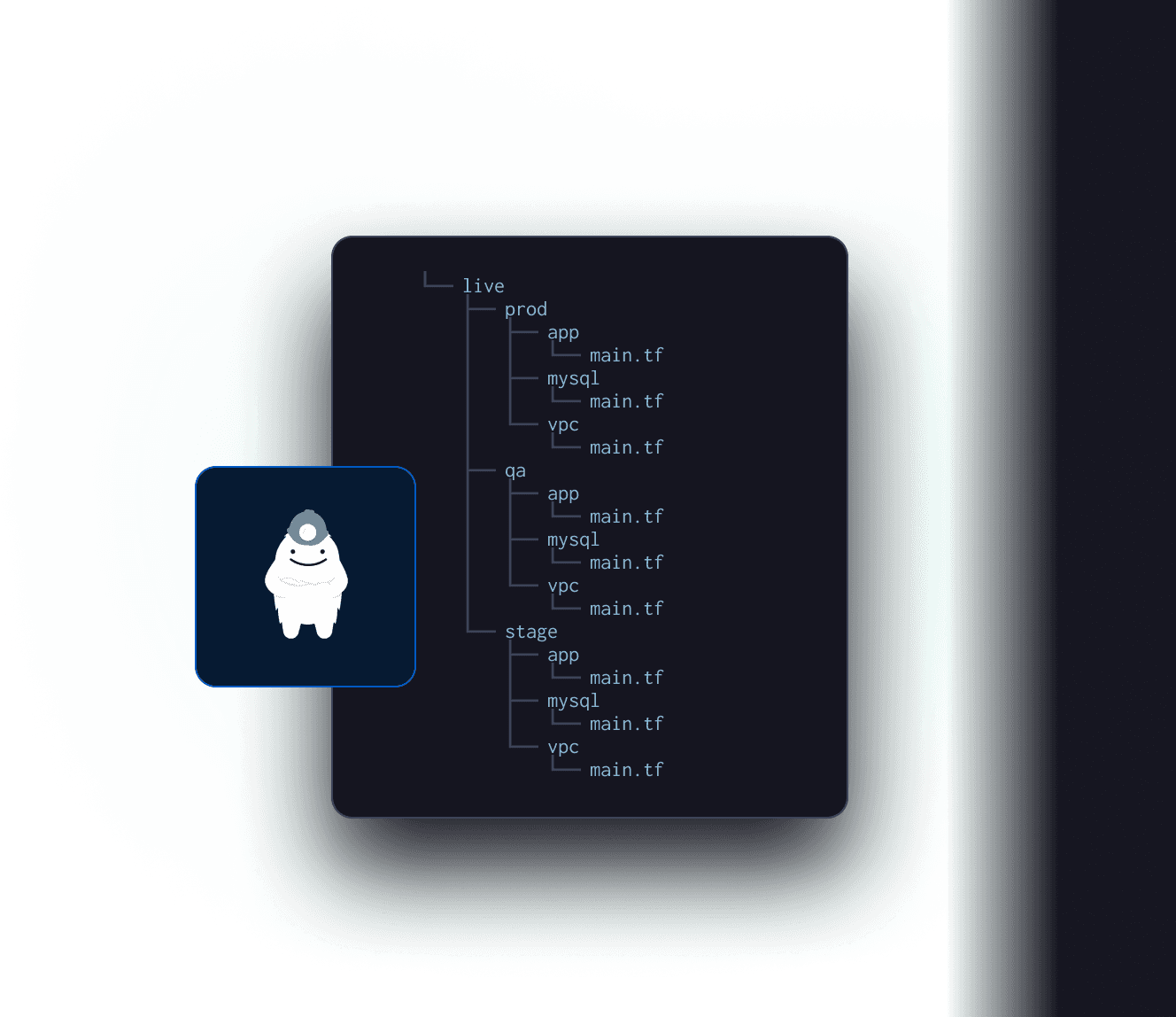
DRY Terraform Code
Leverage the power of Terragrunt and enhance the Terraform experience with the power of Spacelift. Terragrunt is supported natively in Spacelift
Overview and Benefits
Policy Workbench
Spacelift uses an open-source, CNCF-backed language called Open Policy Agent (OPA) to empower you to make even more policy-based decisions , ranging from access and RBAC to handling repository events and building sophisticated workflows.
Visualize your infrastructure
Spacelift provides the ultimate visibility into the resources managed by your organization. Group and filter your resources to understand the architecture or look up their history to get a glimpse of the evolution of your infrastructure.
Built with your needs in mind
Spacelift provides native support for Cloud Providers, Version Control Systems, and Communications tooling to fit right into your existing processes and procedures. This allows organizations to quickly introduce the benefits of Spacelift while limiting the disruption that changes can cause.
Cost Estimation
Spacelift integration with Infracost allows you to run a cost estimation and breakdown during Spacelift runs, providing feedback on PRs, and allowing you to integrate cost data with plan policies. This allows you to understand how infrastructure changes will impact costs, and to build automatic guards to help prevent costs from spiraling out of control.
Driftless infrastructure
Spacelift incorporated Automatic discovery and remediation of infrastructure drift . Just define your desired state and get alerts with fixes anytime something goes changes out of band.
Predictable pricing model
Spacelift costs are based on factors that are easy to predict and control – the number of private workers and the number of active application users.
Spacelift is powering platform teams
everywhere

“Our team includes developers distributed around the world across American, Australian, and European time zones. Spacelift has given us a lot of additional trust in each other. Because we have guardrails and defined workflows set up it allows us to have shared visibility into what we’re all doing.”

“With Spacelift, we can have an overarching collection of policies that govern when and how everything runs. This stuff is radically further ahead than the way 99% of companies use Terraform.”

"Spacelift has helped us set up a flexible and productive Infrastructure as Code environment. It makes the basics like setting up and iterating on plans simpler and quicker, which has allowed us to focus on larger engineering concerns. And when things in our infrastructure go wrong, that’s when Spacelift really shines!"

"Spacelift has enabled Checkout to scale from a handful of deployments per day to averaging over 500 per day."
IaC Was Just The Beginning
You need a collaborative environment for building the platform your teams need, with deep insight, full control, and unlimited flexibility. Build better with Spacelift.
Liftoff with Spacelift!Frequently Asked Questions
How does Spacelift improve Terraform workflows?
Spacelift layers automation, policy enforcement, and collaboration on top of Terraform with a GitOps model. It adds drift detection, granular RBAC, OPA policies, secure state options, and clear run history.
How does Spacelift compare to running Terraform alone?
Terraform alone needs scripts for plans, applies, state, and approvals. Spacelift centralizes this with built-in CI/CD workflows, policy-as-code, drift detection, and fine-grained RBAC to standardize how infrastructure changes move from pull request to production.
How does Spacelift handle Terraform state and drift?
Spacelift can manage Terraform state with an optional encrypted backend, or it respects your configured backends like S3 or Azure Blob. For drift, it schedules or triggers proposed runs that compare desired and actual state and highlights differences, with the option to reconcile automatically. Drift reports surface in the UI and can send notifications.
Can Spacelift help enforce Terraform policies and governance?
Yes. OPA and Rego apply fine-grained rules for approvals, resource guardrails, and environment controls, with tagging standards and role or branch gates plus full auditability.
How does Spacelift improve collaboration for large Terraform teams?
Spacelift centralizes workflows around version control with RBAC, shared modules, review gates, and plan previews on pull requests, so teams coordinate changes without collisions. Policy-as-code enforces consistent rules across stacks, while drift detection and approvals keep everyone aligned and reduce rework.