[IaCConf Virtual Event] Why open-source IaC is far from dead
Elevate Your Ansible Automation
Stop struggling with Ansible playbook execution. Get greater control, inventory visibility, and a unified infrastructure pipeline.
See it in action


















Managing large-scale playbook execution is hard

Playbook execution
The larger/more complex your environment is, the harder it is to manage deployed resources.

Limited visibility
Running Ansible at scale means limited visibility into the success or failure of your runs.

Siloed workflows
Managing provisioning and configuration separately slows developer velocity.

No self-service
Developers shouldn’t have to write playbooks to get the infrastructure changes they need.
The Spacelift approach
Spacelift enables you to automate Ansible playbook execution with visibility and control over resources, and seamlessly link provisioning and configuration workflows.
Automate playbook execution
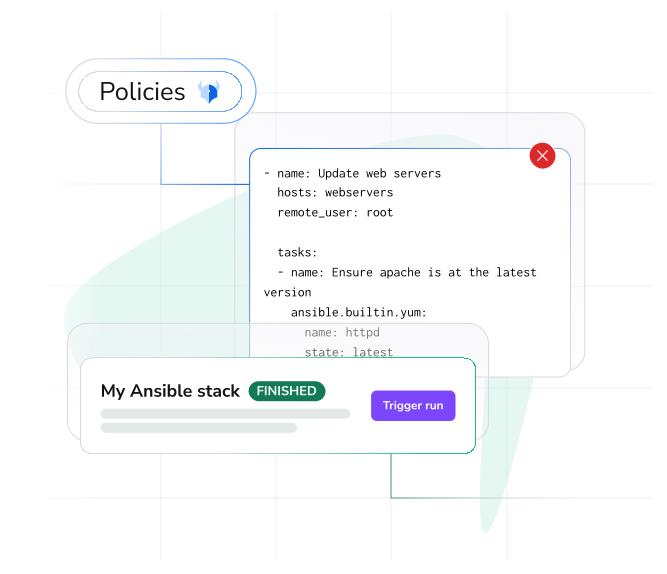
Manage the execution of Ansible playbooks from one central location:
Dive into past playbooks with detailed guidance to simplify troubleshooting.
Define custom policies for Ansible workflows.
Simplify cross-host playbook execution by passing config parameters & automating follow-up runs.
Get insights into inventory and playbook run status
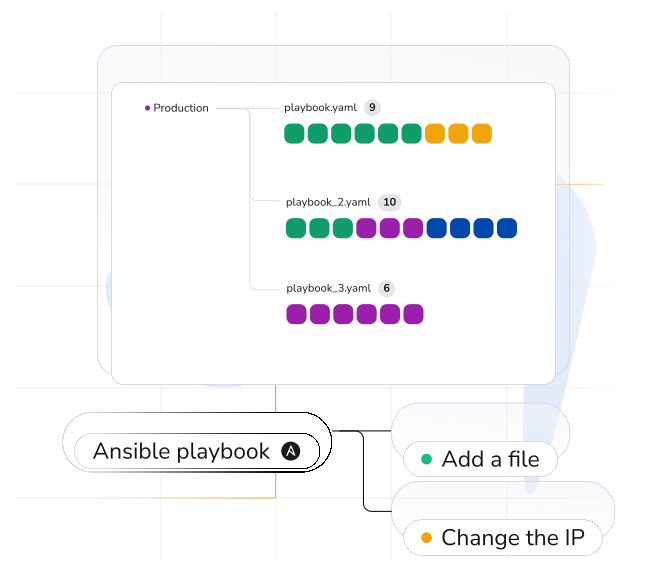
See all Ansible-managed resources with clear indicators of run success or failure:
Instantly see the outcome of a run and pinpoint failures and issues.
Easily get visibility into all your hosts and playbooks in one place.
Quickly identify the root cause of Ansible failures and seamlessly resolve them.
Integrate IaC & Ansible workflows
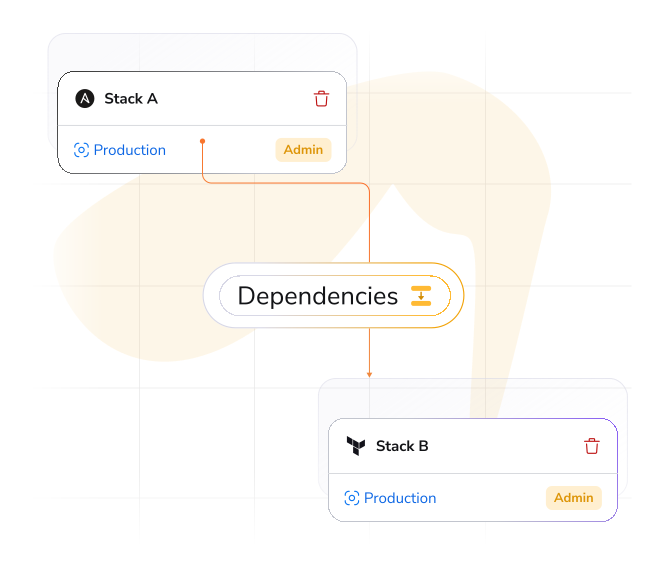
Define workflows that combine IaC & Ansible to streamline provisioning and configuration management:
Combine Ansible and any flavor of IaC pipelines into a single automated workflow.
Build multi-infrastructure workflows with Stack Dependencies.
Easily pass configuration parameters when triggering a run.
Give developers Ansible self-service
Make it easy for developers to extend self-service beyond provisioning:
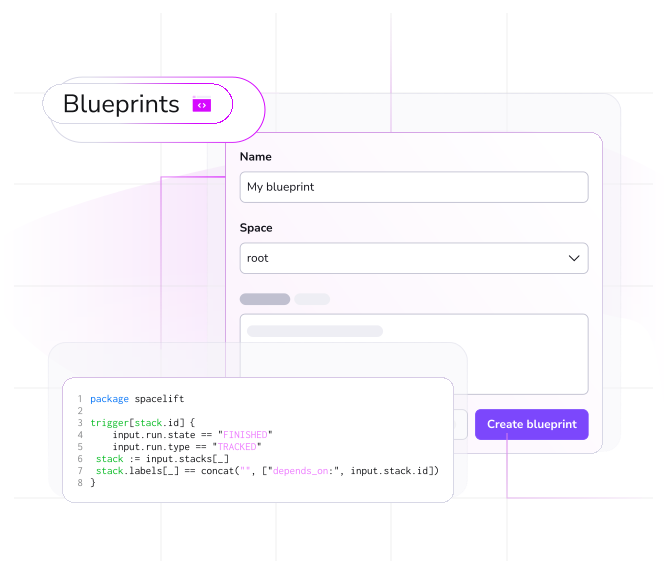
Provide Golden Paths via the UI or API with Ansible Blueprints you define.
Ensure your developers follow best practices across the entire infrastructure pipeline with Plan Policies.
Make your developers happy by integrating Ansible playbooks into infrastructure self-service.
Want to dive deeper?
See how Spacelift makes it easy for you to manage your IaC and Ansible pipelines.


"It has reduced churn in getting our infrastructure changes out into the wild, keeping everything stable. And the ease of use has made our infrastructure far more accessible to the whole team."


“I can go to Spacelift, I can look at a stack, I can go to the resources tab and see yes that’s exactly what’s eployed. So if someone comes to me and says something is broken, I can say ‘Right, there’s a stack, let me run it, let me make sure there’s no drift’, and it works.”


"Spacelift has become an integral part of the Novibet platform, the Ansible integration is a perfect example of how Spacelift is enabling us to get to the next level in our infrastructure orchestration journey faster than we would ever have thought possible."
Spacelift Resources
Configuration Management with Ansible
Learn all about Ansible, its. use cases, and how it's a natural fit for configuration management.
Learn all about Ansible, its. use cases, and how it's a natural fit for configuration management.
Learn more
Using Terraform & Ansible Together
Learn how to use Terraform and Ansible together to greatly enhance your workflows and simplify the management, provisioning, and configuration of your infrastructure.
Learn how to use Terraform and Ansible together to greatly enhance your workflows and simplify the management, provisioning, and configuration of your infrastructure.
Learn more
7 Ansible Use Cases
Learn about the different use cases of Ansible, it's impact on configuration management, complex workflow orchestration, and more.
Learn about the different use cases of Ansible, it's impact on configuration management, complex workflow orchestration, and more.
Learn more
Frequently Asked Questions
Can Spacelift run my existing Ansible playbooks?
Yes. Point a Spacelift stack at your repo, select the playbook and inventory, and run with Spacelift runners. You can install roles and collections, use Galaxy, and pass variables from code or contexts.
How does Spacelift handle Ansible secrets and credentials?
Store secrets in encrypted contexts and inject them as environment variables or files during runs. Use cloud auth like AWS assume role or Azure workload identity, SSH keys, and external secret managers via environment variables.
Can I use Spacelift to manage Ansible across multiple clouds?
Yes. Attach the right credentials per stack or environment and target multiple accounts and regions. Worker pools and contexts help standardize access so one workflow can drive AWS, Azure, and GCP.
How do I trigger Ansible runs in Spacelift?
You can trigger Ansible runs from pull requests, branch pushes, schedules, the UI, the CLI, or the API. Spacelift can post job status back to your VCS for review.
Does Spacelift support policy-as-code for Ansible?
Yes. Use OPA and Rego to gate runs based on branch, path, inventory, user role, or environment. Require approvals, block risky changes, and keep a full audit trail.
What is the difference between Spacelift Ansible integration and native Ansible Tower?
Tower focuses on Ansible job templates, inventories, and credential storage. Spacelift is VCS driven and unifies Ansible with Terraform and other IaC tools, adds policy as code, RBAC, review workflows, and GitOps approvals across clouds. Many teams keep Tower for inventory and use Spacelift for Git centric automation and governance.