Platform engineering is the process of building and maintaining internal platforms that serve developer needs. It exists to automate complex DevOps workflows, enabling developers to stay productive.
Platform teams have risen to prominence over the past decade and now operate within software organizations of all sizes. But merely building a platform doesn’t guarantee success: platforms often fail because they don’t match how developers work, or because of scalability and usability problems.
In this article, we bring together 15 platform engineering best practices that help you avoid this fate. We cover the technological and human factors of building a platform, plus concerns such as cost, reliability, and shared responsibility.
What platform engineering actually means
Platform engineering is all about creating internal platforms that give developers what they need to efficiently build, test, and deploy software. Platforms should solve the specific pain points being experienced by your organization’s development teams. This means no two platforms are ever quite alike.
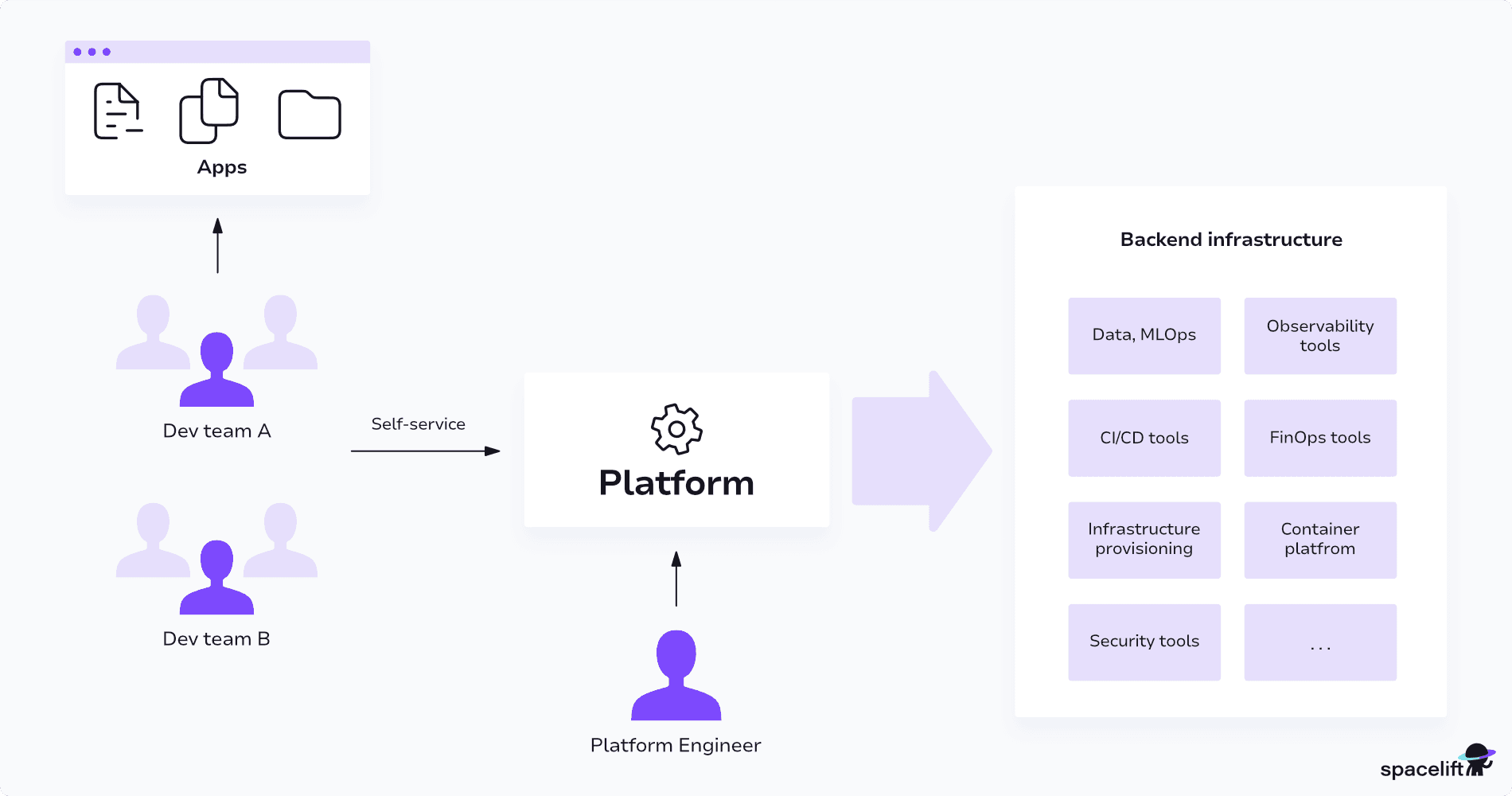
Succeeding at platform engineering requires a deep understanding of the DevOps workflows that your developers use. Knowing what developers are doing and where they’re feeling friction is the key to a successful platform launch.
At the same time, the platform must also be optimized for the competing concerns of cost, speed, and stability. Otherwise, the platform won’t have a positive impact and could end up falling unused.
Platform engineering best practices
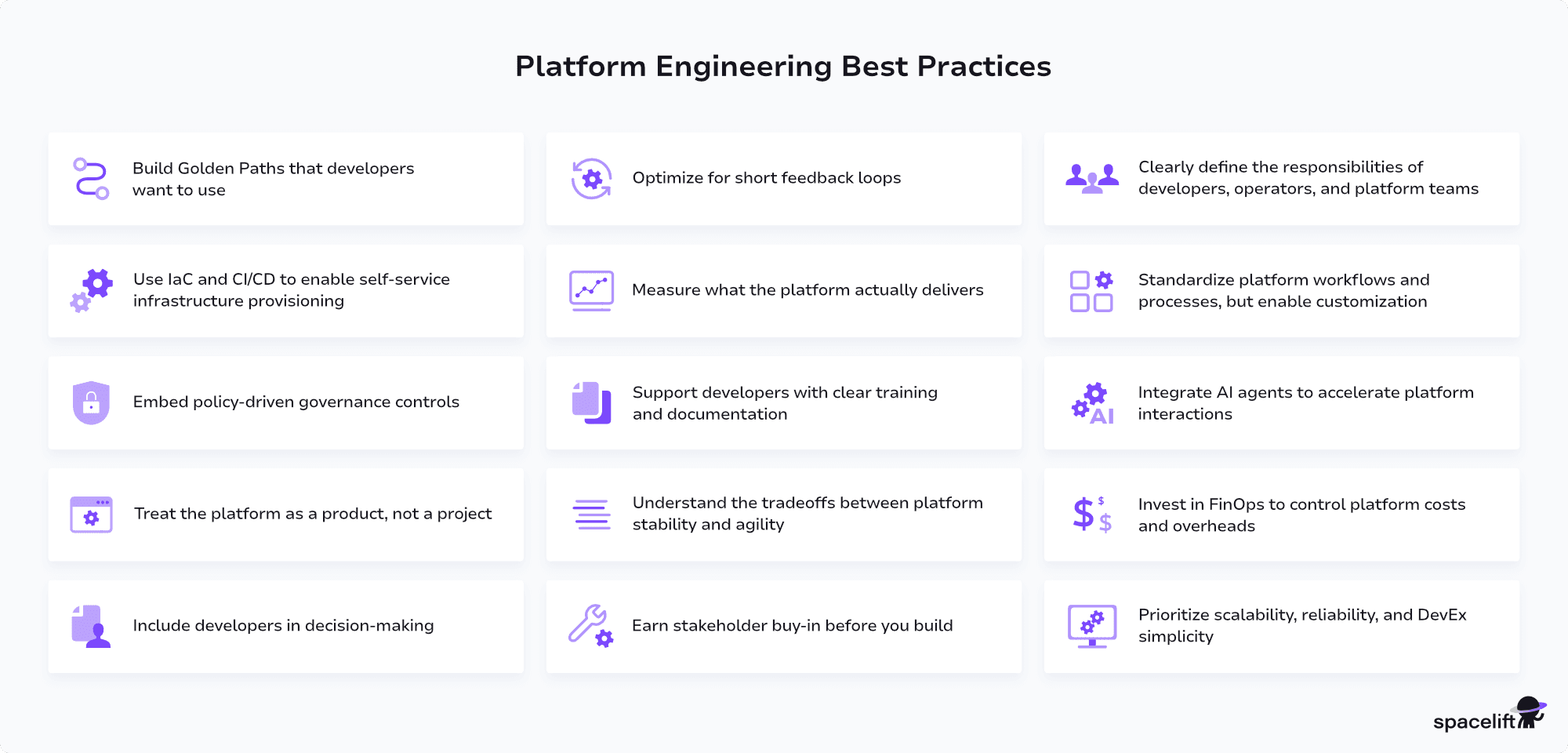
The following 15 best practices cover the key requirements for modern-day platform engineering. Apply them to build internal platforms that enable autonomous developer work. These productivity gains compound across the DevOps lifecycle.
1. Build Golden Paths that developers want to use
Golden Paths are standardized end-to-end workflows that allow developers to perform common tasks without having to configure anything themselves. Building your internal platforms around golden paths reduces the work that developers need to do.
Golden Paths reduce cognitive load and help prevent decision fatigue by leaving engineers with fewer choices to make. Removing customizable options in favor of predefined Golden Paths increases productivity and keeps workflows running smoothly.
2. Use IaC and CI/CD to enable self-service infrastructure provisioning
Combining infrastructure as code (IaC) and continuous integration and continuous delivery (CI/CD) tools allows developers to self-serve their infrastructure. Instead of waiting for ops teams to provision new resources, developers can trigger pipelines to deploy components from pre-approved IaC files. Developers keep moving forward when they need new environments, with no costly bottlenecks.
3. Embed policy-driven governance controls
Implementing policy-based governance controls protects your platforms and infrastructure from unauthorized developer activity. Run policy as code solutions such as Open Policy Agent (OPA) within your pipelines and Golden Paths to continuously enforce security, compliance, and business rules.
These checks run on every deployment and configuration change, so you catch a risky one before it reaches production instead of after. This is what lets you give developers self-service without giving up control: they get infrastructure on demand, and you keep the rules that satisfy your security and audit requirements.
As you open more internal services to developers, the same policies apply to every request, so widening access doesn’t widen your risk.
4. Treat the platform as a product, not a project
Platform engineering exists to serve developers, so they’re effectively customers of your platform team. Treating your platform as a developer-facing product focuses decision-making, clarifies ownership, and gets all stakeholders invested in its success.
Driving platform adoption is just like growing sales for any other product. Successfully marketing your platform to developers fuels business growth by helping them ship faster.
5. Include developers in decision-making
Involving developers in decision-making directly improves your platform engineering outcomes. Only by listening to developers can your platform team understand what’s causing problems and what the ideal solutions look like.
Consulting developers on how they prefer to run a workflow ensures you build platforms around real problems instead of misplaced assumptions.
6. Optimize for short feedback loops
Shortening feedback loops allows developers to iterate faster. Quicker pipelines also let your team catch problems sooner, before they have time to escalate into larger issues.
Tune platform services and infrastructure so key tasks such as builds, tests, and deployments run as efficiently as possible. For maximum effect, surface pipeline results directly in developer IDEs, terminals, and chat tools. Developers get the information they need without leaving the tools they already work in.
7. Measure what the platform actually delivers
Implementing a thorough observability layer ensures you can make data-driven decisions as you iterate on your platform. Precise metrics like average request duration, platform uptime, and the number of services each developer uses per day reveal how developers actually use your platform’s different components.
Standardizing logs and traces across platform services keeps your platform activity visible and understandable. This makes it easier to analyze the causes of errors so you can recover from incidents faster.
Above all, capturing detailed observability data gives you a clear view of your platform’s reliability and how well it’s meeting developer needs.
8. Support developers with clear training and documentation
Clear documentation and training materials reduce friction during developer onboarding. They encourage platform adoption by keeping developers informed about what’s available and how to use it.
High-quality docs also reduce platform team support overheads. Enabling devs to reliably self-serve information means platform engineers can spend more time building new services, instead of responding to support tickets.
9. Understand the tradeoffs between platform stability and agility
Developer platforms must be both stable and agile, but achieving this in practice can be harder than it seems. Stability is important because developers must be able to depend on services behaving in predictable ways. However, platforms also need to be agile enough to efficiently adapt as your development workflows evolve.
Optimizing for stability generally requires minimizing how often you make breaking changes to your platform.
On the other hand, agility requires platform teams to quickly alter components without encountering excessive bureaucracy. Try to find a middle ground that suits your operations. For example, you could release breaking changes to existing services behind a feature flag or new API version.
10. Earn stakeholder buy-in before you build
Platform engineering success depends on all stakeholders becoming fully invested in your platform. Gaining buy-in from development teams is essential to ensure your platform is actually adopted, but it’s also important to keep security, finance, compliance, and business leadership departments on side.
These teams will usually have a role in providing adequate resources to ensure a smooth platform launch.
11. Clearly define the responsibilities of developers, operators, and platform teams
Platform ownership primarily rests with platform teams, but some responsibilities should still be shared with other groups. Clearly defining ownership for different functions promotes accountability and ensures the platform is optimally positioned to meet everyone’s needs.
As an example, it’s common for developers to have high-level ownership of platform functionality. Being the effective customer, they define which services they need and the ways in which they wish to work. Platform teams are then responsible for implementing the requested services, while operators maintain the infrastructure that lets the platform scale reliably.
12. Standardize platform workflows and processes, but enable customization
Standardization is one of the main objectives of platform engineering. Providing a consistent way for developers to launch key workflows saves time and prevents errors.
Nonetheless, too much rigidity can be a hindrance, as when developers want to test a service with a slightly different configuration. While it’s best to keep options to a minimum, selectively enabling customization in relevant places will help your platform flex to meet developer needs.
13. Integrate AI agents to accelerate platform interactions
Agentic AI and platform engineering closely complement each other. Many features commonly found in internal platforms are a natural fit for agents, such as provisioning environments from a preconfigured IaC template or checking the status of a deployment.
Agents make the platform experience even simpler for developers. A single conversation with an agent enables devs to trigger complex end-to-end workflows and then request follow-up actions. Because they no longer need to build custom platform interfaces, focusing on agents can also reduce overhead for platform teams.
Platform engineers can instead focus on creating MCP servers and agent skills to enable safe AI access to relevant tools, processes, and internal systems.
14. Invest in FinOps to control platform costs and overheads
FinOps is the practice of controlling cloud infrastructure costs using a combination of automated tools and cultural processes. Integrating FinOps tools into your platforms can help prevent overspending as your platform grows and developer activity increases.
Gaining visibility into where costs are being accrued allows you to attribute spending to specific teams and developers. Clearly, understanding how budgets are used enables you to make informed decisions to reduce spending and improve your platform’s return on investment.
15. Prioritize scalability, reliability, and DevEx simplicity
Platforms must be able to scale as your organization grows. At the same time, they need to be simple enough to deliver real-world DevEx improvements. Making platforms too complex can hinder adoption if services take too long to run, require excessive configuration, or become unreliable at scale.
Prioritizing the keystones of scalability, reliability, and simplicity will keep you on track as you design your platform’s architecture. Avoid adding new platform features or unproven integrations unless they solve real developer needs, as over-engineering can easily derail platform engineering efforts.
How to improve your platform engineering with Spacelift
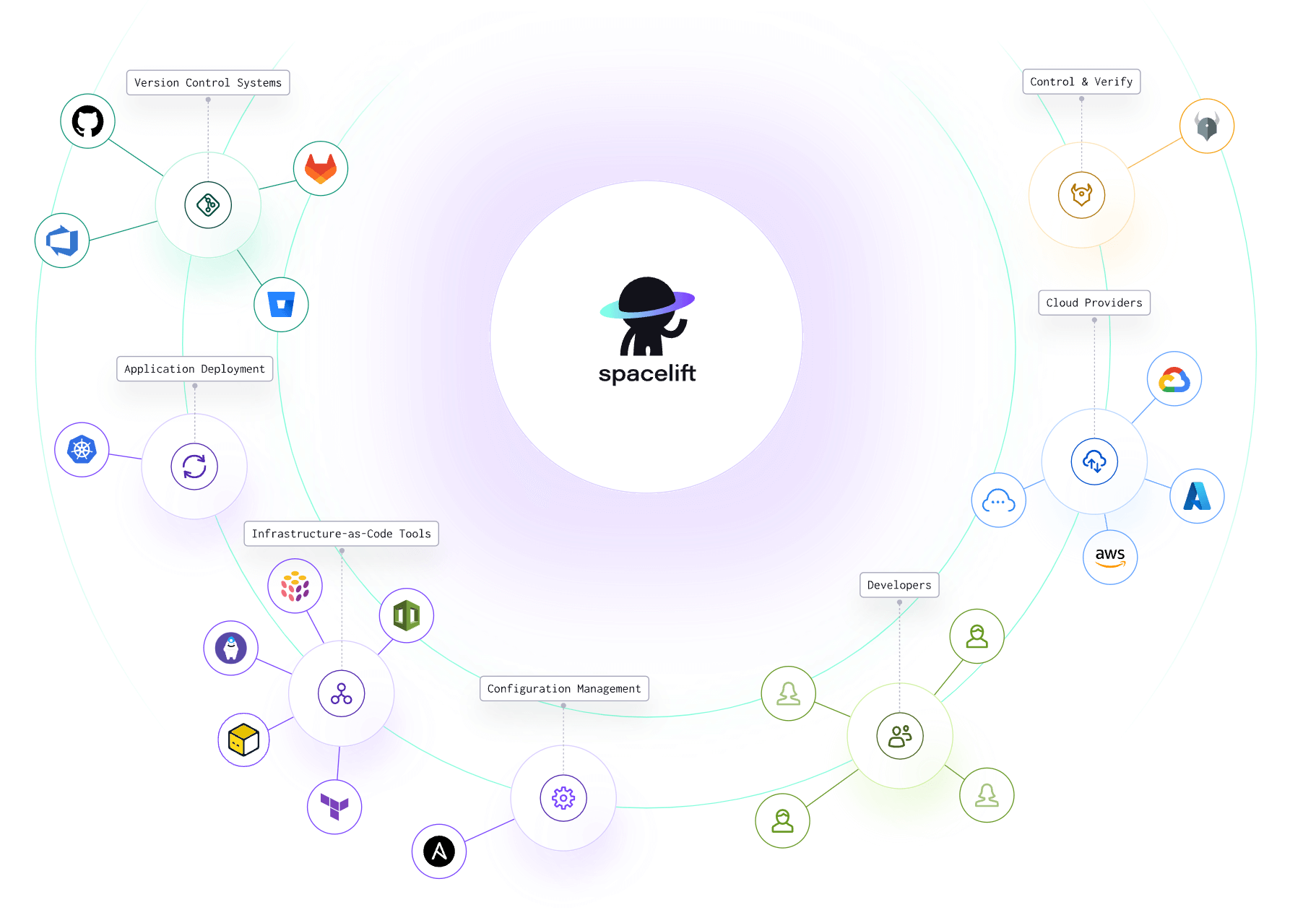
Spacelift is an infrastructure orchestration platform built for the AI-accelerated software era, and a great base for platform engineering. It manages the full lifecycle of both traditional IaC and AI-provisioned infrastructure. It enables you to build safe self-service infrastructure workflows that you can configure and govern using a single centralized solution.
Spacelift Intelligence adds an AI-powered layer across both traditional IaC and AI-provisioned infrastructure. Developers describe what they need in natural language with Intent, and the Infra Assistant helps you understand what’s deployed, diagnose failures, and enforce policy in plain English. The same guardrails, credentials, and visibility apply either way.
The platform also supports Prometheus and Datadog integration, allowing you to collect detailed metrics and analyze developer activity.
Spacelift supports precise RBAC-based access management, policy-driven compliance controls, and direct integrations with your source repositories and cloud accounts. Our solution gives you a platform engineering head start by enabling scalable and secure infrastructure management.
Spacelift lets platform teams centrally manage infrastructure workflows, while empowering developers to self-serve the resources they need.
If you want a product that greatly enhances the lives of your platform engineering team members, create a free account with Spacelift today, or book a demo with one of our engineers.

1Password, a global leader in identity security, used to rely on a small team of cloud platform engineers to manage infrastructure-as-code (IaC) operations for the entire organization. However, with Spacelift’s guardrails and security in place, much of that IaC management is delegated to the teams that own it, while the cloud platform engineering team gets on with the business of providing expertise.
Key points
Platform engineering increases software delivery throughput by equipping developers with purpose-built automation. But the concept only succeeds when it’s approached from the right perspective. You must treat the platform as a product, then make decisions in the context of what best fits developer workflows.
The best practices we’ve discussed above should provide a helpful starting point for planning your internal platforms. Prioritizing DevEx, scalability, and reliability will get you a long way down the path to success. Just remember that it’s not our word that really matters: listening to DevOps teams is the key to building platforms that live up to both developer and business expectations.
Improve developer velocity with Spacelift
Overworked infrastructure teams slow down projects. Give developers the ability to self-provision with controls that reduce bottlenecks and time to market.
Frequently asked questions
What's the difference between platform engineering and DevOps?
DevOps is a culture and set of practices aimed at closing the gap between development and operations, while platform engineering is the discipline of building the internal developer platforms and self-service tooling that make those practices scalable across teams.
When should a company start investing in platform engineering?
Once cognitive load and duplicated tooling start slowing multiple teams, usually past a handful of engineers, a dedicated platform effort pays off. Investing too early, before clear patterns emerge, tends to produce an over-engineered platform nobody adopts.
What are the most common platform engineering anti-patterns?
The frequent ones include building a platform without treating it as a product (no users, no feedback loops), forcing adoption through mandates instead of earning it through good developer experience, and over-abstracting until the platform hides too much and blocks legitimate edge cases.